Where Every Dollar Goes: A Line-by-Line Look at Three Podcast Budgets
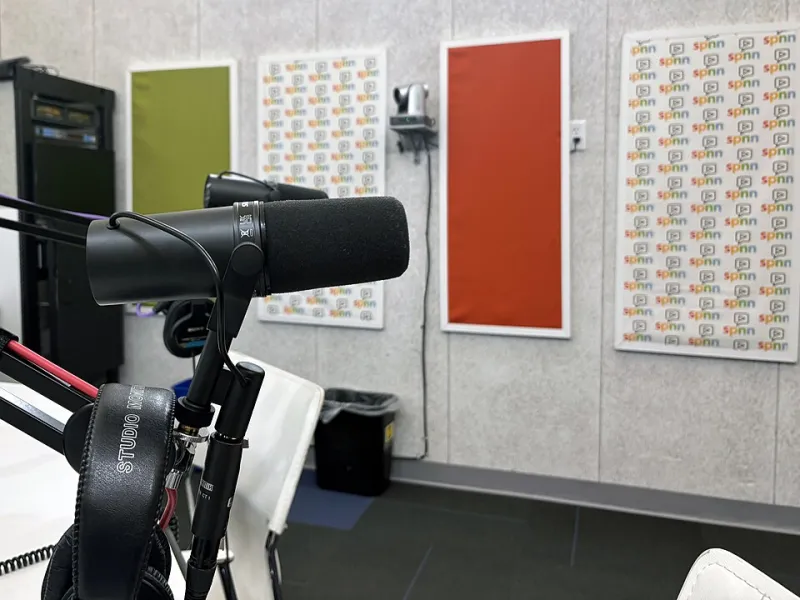
Photo: Myotus, CC BY 4.0, via Wikimedia Commons
Ask ten podcasters what an episode costs and you'll get answers ranging from "basically nothing" to "more than my car payment." Both can be true. The question isn't whether you can spend $5,000 on an episode — it's whether you should.
We crunched three realistic budgets to see exactly where the money goes at each tier, and more importantly, what listeners actually hear when the budget goes up.
The $50 Episode: The Garage Band Tier
At fifty bucks an episode, you're doing almost everything yourself, and that's fine. Here's a typical breakdown:
- Hosting: $12/month (flat, so call it $6 per weekly episode)
- Mic: You already own it — a $70 dynamic USB mic counts
- Editing software: Free (Audacity or GarageBand)
- The rest: Your time, coffee, and maybe a $20 stock music license
The $50 mostly covers hosting amortization, transcription credits, and small incidentals like an intro track or cloud storage.
What listeners notice: Honestly, less than you'd think. A decent dynamic mic in a closet full of clothes sounds shockingly good. The $50 show's weakness isn't audio quality — it's consistency. Editing fatigue is real, and by episode 30, your cuts get sloppier and your publishing schedule gets... flexible.
The $500 Episode: The Serious Hobbyist
This is where most successful independent shows land once sponsorship or a day-job budget kicks in. The money shifts like this:
- Professional editing: $150–$250 per episode
- Transcription: $30–$60
- Hosting and analytics: $20–$50
- Cover art refresh, audiogram clips, social assets: $100
- Guest booking or research help: $100
What listeners notice: The jump from $50 to $500 is the biggest audible upgrade on this list. A pro editor removes the "umms," levels the loud guest and the quiet host, and kills the HVAC hum you stopped hearing months ago. Listeners may not name what changed, but they'll binge more episodes without realizing why.
The other hidden win: buying back your time. If editing eats six hours a week, that $200 is often cheaper than the burnout it prevents.
The $5,000 Episode: The Full Production
This tier is network-level or brand-funded territory:
- Producer and showrunner: $1,500–$2,000
- Studio recording with an engineer: $500–$1,000
- Sound design, scoring, and mix: $800–$1,200
- Marketing and paid acquisition: $1,000+
- Transcription, clip production, PR: $500+
What listeners notice: Here's the uncomfortable truth — going from $500 to $5,000 doesn't make your show five times better. It might not even make it twice as good. What it buys is polish at the margins: radio-grade sound design, narrative structure, and crucially, distribution. That marketing line item is often the difference between a great show nobody finds and a great show that charts.
The Diminishing Returns Curve
If you chart quality against spend, the curve is steep from $50 to $500 and nearly flat from $500 to $5,000. Our rule of thumb: spend until the audio stops distracting listeners, then put every additional dollar into marketing and consistency.
Run your own numbers with our budget template — map your current spending against these tiers and find the line where more money stops buying more show.
The best budget isn't the biggest one. It's the one you can sustain for 100 episodes.