Booking a Big Name: We Added Up the Real Invoice Behind That Dream Interview

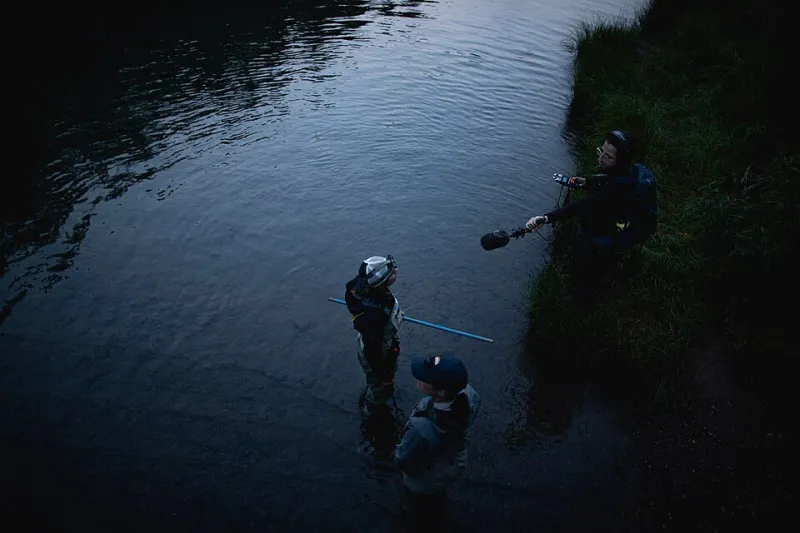
Photo: Lordmccloud, CC BY-SA 4.0, via Wikimedia Commons
Every podcaster has a dream guest list. For some it's a New York Times bestselling author, for others it's the founder of that startup everyone's talking about on LinkedIn. And when the opportunity finally comes along — maybe through a mutual friend, maybe through an agency — the instinct is to say yes immediately.
Here at Podcast Calculator, our instinct is to open a spreadsheet. So that's what we did. We priced out the full cost of landing a big-name guest, and the results surprised us. Sometimes the dream interview is a bargain. Sometimes a solo episode recorded in your pajamas quietly out-earns it. The difference comes down to a handful of numbers most hosts never add up.
The Sticker Price Nobody Quotes You
Let's start with the obvious line item. If you book a guest through a PR agency or booking service, you might pay anywhere from $500 to $2,500 for a placement, depending on the name and the agency's tier. Some publicists charge a flat monthly retainer — often $1,000 to $3,000 — that covers placements across multiple shows, which means you're absorbing a slice of that cost whether you realize it or not.
Most guests, of course, don't charge a fee. But 'free' is doing a lot of work in that sentence. Here's what else shows up on the invoice.
Prep Is a Part-Time Job
A casual chat with a friend doesn't require homework. A marquee guest does. Realistic prep for a high-profile interview looks like:
- 4 to 6 hours reading the guest's book, recent interviews, and press tour coverage
- 1 to 2 hours drafting questions and mapping the arc of the conversation
- 1 hour coordinating schedules across time zones (their assistant will cancel once — plan for it)
Call it 7 to 9 hours of prep. If you value your time at even $50 an hour — and you should, because that's roughly what freelance work pays — you've just spent $350 to $450 before anyone hits record. Compare that to a solo episode, where prep might run you 90 minutes.
The Edit Gets Longer, Too
Big-name conversations tend to run long. The guest has stories, your audience wants depth, and before you know it you've recorded 95 minutes that need to become a tight 55. That's a heavier edit than your typical episode — often 1.5 to 2 times the usual post-production time. If you outsource editing at $75 to $150 per episode, budget for the top of that range. If you edit yourself, add another 3 to 5 hours to the tab.
Add show notes, pull quotes, audiograms, and a promo clip or two, and the total production time for a marquee interview lands around 15 to 20 hours — versus 6 to 8 for a standard episode.
The Break-Even Math
So when does it pay off? Let's build the calculation the way we always do: total cost divided by what a download is worth to you.
Say your all-in cost for the big interview is $1,000 (agency fee plus the value of your time plus extra editing). If your show earns roughly $25 per 1,000 downloads through sponsorships — a solid mid-tier CPM blend — that episode needs about 40,000 downloads to break even in direct revenue.
If you monetize at $50 per 1,000 (strong sponsorship plus affiliate revenue), the bar drops to 20,000. If you're pre-monetization and earning nothing per download yet, the break-even point is technically infinite — which doesn't mean don't do it, but it does mean the payoff has to come from somewhere other than revenue.
The Hidden Upside: Cross-Promotion
Here's where the math gets friendlier. A big guest usually brings promotion — a share to their 200,000 Instagram followers, a mention in their newsletter, maybe a swap where you appear on their show. That's earned distribution you didn't pay cash for, and it can lift the episode's downloads two to five times above your baseline.
It can also lift your baseline. A spike episode converts a percentage of new listeners into subscribers — industry experience suggests 1 to 3 percent of spike listeners stick around. Those stickier listeners show up for every future episode, which means the guest's value compounds across your whole catalog, not just one file.
When a Solo Episode Quietly Wins
Now run the same math on a regular episode. Cost: maybe $300 in time and production. Downloads: your baseline, say 3,000. Revenue: $75. It's profitable on its own terms, and it took a quarter of the effort.
The uncomfortable truth is that a big-name guest underperforms expectations more often than anyone admits. If the guest doesn't promote it, if the conversation falls flat, if their audience simply doesn't overlap with yours — you've spent 15 hours and real money to reach roughly the same number of people. We've seen hosts chase a marquee name for months while their publishing schedule lapsed, and the lost momentum cost more than the guest ever returned.
The Rule of Thumb
Before you say yes to a big get, run three numbers:
- All-in cost — agency fees plus your prep time plus the heavier edit
- Realistic download multiplier — be honest about whether this guest's audience actually overlaps with yours
- Your revenue per 1,000 downloads — and whether the episode clears the break-even bar
If the guest's promotion realistically gets you past break-even, book the flight (or the Zoom). If it doesn't, spend those 15 hours recording three solo episodes that each pay for themselves. Your spreadsheet won't care about the name recognition. Neither should your budget.